Marc Goodman: A vision of crimes in the future
Marc Goodman: A vision of crimes in the future (by TEDtalksDirector)
What can (also) be expected with drones, 3D printing, the internet of things and DNA sequencing…
Marc Goodman: A vision of crimes in the future (by TEDtalksDirector)
What can (also) be expected with drones, 3D printing, the internet of things and DNA sequencing…
TEDxCambridge – Scott Summit’s beautiful artificial limbs (by TEDxTalks)
3D printing lets us move away from mass-produced identical items, to personalised experiences
Free access to British scientific research within two years (The Guardian):
An important move for open access, but probably not the right one:
[…] research papers that describe work paid for by the British taxpayer will be free online for universities, companies and individuals to use for any purpose, wherever they are in the world.
[…]
British universities now pay around £200m a year in subscription fees to journal publishers, but under the new scheme, authors will pay “article processing charges” (APCs) to have their papers peer reviewed, edited and made freely available online. The typical APC is around £2,000 per article.
This is called “gold” open access, the revenue stream of publishers will change, but still be there. The alternative is “green” open access, where researchers make their papers available online after being accepted in journals, but without an alternative revenue stream.
Another consequence of the shift could be a “rationing” of research papers from universities as competition for funds to publish papers intensifies. […] For example, a study that finds no beneficial effect of a drug might be seen as negative results and go unpublished […]
[…]
“The Finch committee’s recommendations look superficially as if they are supporting open access, but in reality they are strongly biased in favour of the interests of the publishing industry over the interests of UK research,” […]
“Open” should be about “commons”, not about vested interests or obsolete business models and organisations.
EU Opens Up Drug Data Secrets:
via the European Public Sector Information Platform and Reuters:
Europe’s medicines regulator is opening its data vaults to systematic scrutiny in a move that will let independent researchers trawl through millions of pages of clinical trial information.
[…]
Such information is a treasure trove for scientists wanting to test drug company claims and potentially expose product deficiencies.
[…]
giving researchers access to raw data might one day open up new methods for treatment – perhaps using machine learning systems that could marry a patient’s health record directly to data from appropriate clinical trials.
[…]
Europe’s drugs watchdog, however, does not envisage a complete free-for-all for data, which would only be released after the agency has finished reviewing a new drug.
“We don’t want to be blind-sided by studies of poor quality that create a public health scare,” says Eichler. “What the debate now is about is finding the right conditions to minimise the potential for false findings.”

A Phone that Knows Where You’re Going:
The potential of Big Data and why it is scary to have companies and governments collecting it…
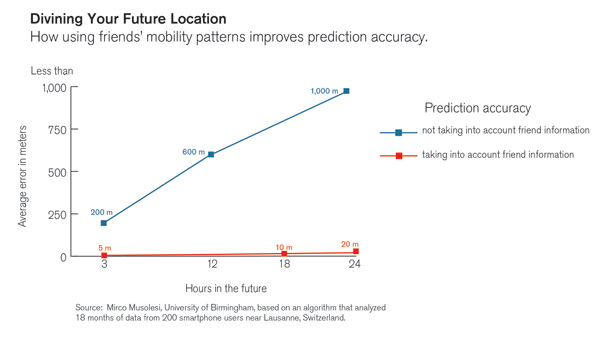
In a study on 200 people willing to be tracked, the system was, on average, less than 20 meters off when it predicted where any given person would be 24 hours later.
Soon we’ll have an app that lets you select people from your social networks that you either want to “bump into” or rather “avoid” tomorrow, and it will advise you on your movements…
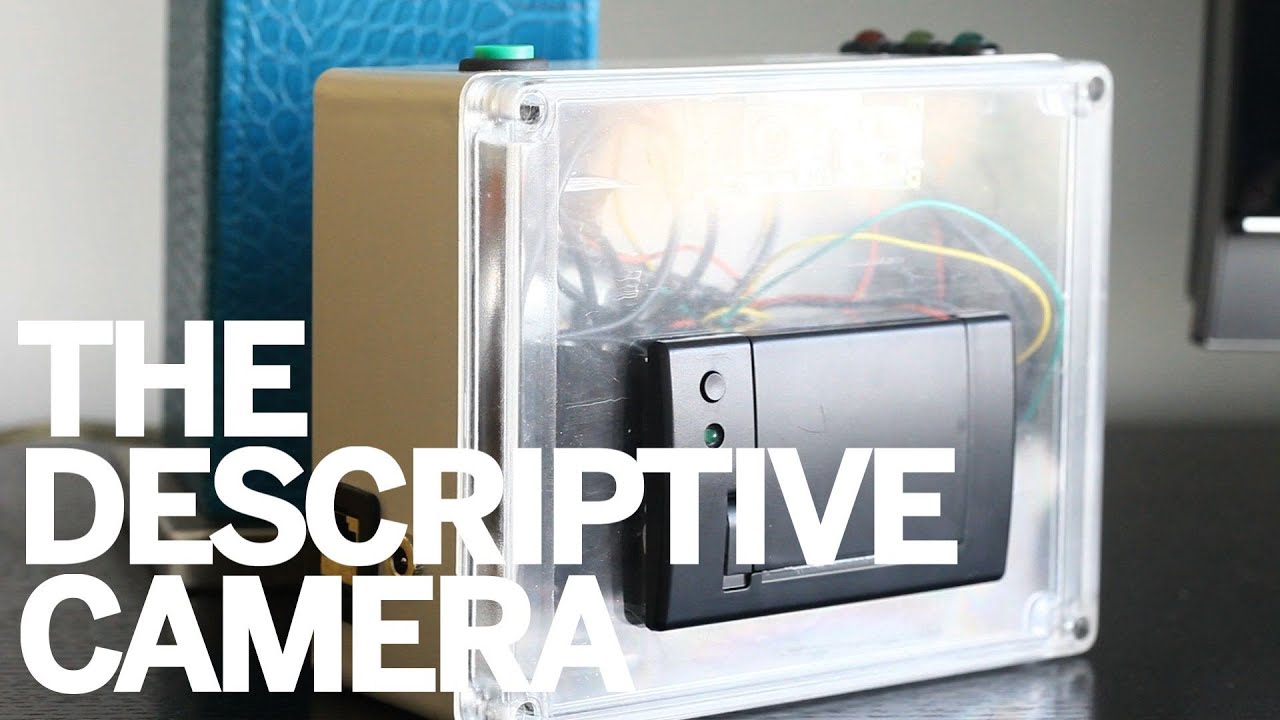
Brilliant! A digital camera sends a picture to a crowdsourcing network to let someone describe what is on the picture, and it then prints out that description for you.
(via Descriptive Camera)
[slide]
20120613 i weeks-1-intro from Rolf Kleef
[/slide]
[slide]
[/slide]
[slide]
20120613 i weeks-2-data from Rolf Kleef
[/slide]
[slide] http://vimeo.com/21711338 [/slide]
[slide]
[/slide]
[slide] http://www.scribd.com/stef_grieken/d/56642060-Presentation-Open-For-Change-Event-may-13th-2011 [/slide]
[slide]
[/slide]
[slide]
20120613 i weeks-3-howtoopen from Rolf Kleef
[/slide]
[slide]
20120613 i weeks-4-bbc from Rolf Kleef
[/slide]
[slide]
[/slide]
[slide]data.worldbank.org[/slide]
[slide][/slide]
[slide]
After Accra:
[/slide]
[slide]
[/slide]
[slide]
[/slide]
[slide]
20120613 i weeks-5-iati from Rolf Kleef
[/slide]
[slide][/slide]
[slide]
Google Fusion tables http://www.google.com/fusiontables/Home/
Google Refine
Scraperwiki
Impure
EDUCOEF data http://openforchange.info/oddc
[/slide]
[slide]
www.hackdeoverheid.nl
[/slide]
We had some intermittent problems recently with a mail server not being available. As it turns out, I basically was doing a “denial of service” attack on my own mail server, thanks to some caveats in how IMAP, push notifications, and my mobile email client, K9 work together.
One of the mail servers we operate quite regularly became unavailable, apparently not accepting any connections. We managed to investigate the problem as it was happening, and found out all available connections for the IMAP server were in use, and nearly all of them originated from a familiar IP address: my home.
I disconnected the email clients on my devices (laptop, phone, tablet) and switched them on one by one. Clearly, my Android-based phone and tablet with the K9 mail client were causing the problem: they made dozens of connections. It turned out the problem was even worse: K9 reconnects several times.
Normally, an email client connects to the mail server to check if there is new mail in any of the folders, via IMAP. It would be nicer if the server just informs the client if there is a new mail available. The client will know immediately, and doesn’t have to poll the server so often, which reduces the load on the server too.
Such “push notifications” are not part of the original IMAP protocol. There are two ways in which IMAP tries to solve this:
Sadly, the second option is still under development, and clients and servers (such as Cyrus) haven’t really implemented it yet.
And even more sadly: with IDLE, you need an open connection for each folder that needs push notifications. If you only have push notifications enabled on one Inbox folder, that’s not such a big deal, but to have push notifications on a dozen folders or more, you need a dozen or more open connections between server and client.
Apparently, Thunderbird limits itself by default to five open connections to the server, no matter how many folders you have. As far as I found out, you’ll have push notifications on the last five folders you’ve looked at.
But K9 does not limit itself. In my case, with a few accounts on our server, and with “push” enabled on all my preferred (“First class”) folders, that resulted in a few dozen open connections.
To make things even worse, K9 quickly detects when I switch networks, for instance when going from Wifi to 3G, and establishes new connections for those folders over the new network. While the mail server still has the old connections open, waiting for them to time out before closing them.
On a regular day, I start at home, then go to my office, with all my devices.
That adds up pretty quickly: 2 * 20 * 3 = 120 connections. No wonder my colleague had trouble accessing email as soon as I started working.
Suffice to say: I switched off push notifications.
Extreme Poverty and Human Rights: A Case Study of the United States of America:
Interesting article. The “usual talk” about eradicating extreme poverty, but applied to an unusual suspect: the US.
Extreme poverty, defined as a composite of income poverty, human development poverty and social exclusion, is not only a problem of poor developing countries, but a phenomenon that is found in most countries in the world. But the fact that the United States, the wealthiest country in the world, also suffers from persistence of extreme poverty is a paradox.
There are no significant trends to indicate that extreme poverty is being reduced over time. In fact, there is qualitative and anecdotal evidence pointing towards a rise in extreme poverty.
[…]
The international community should recognise the existence of conditions of extreme poverty in the United States as indications of the worst form of indignity inflicted upon human beings, which should be regarded as a denial of human rights. Once it is recognised as such, it would be possible for the United States government to adopt programmes based on human rights principles which would surely contribute to the eradication of extreme poverty.
Persistent myths about open access scientific publishing. Dr Mike Taylor in The Guardian:
For Elsevier, the biggest of the barrier-based publishers, we can calculate the total cost per article as £1,605m subscription revenue divided by 240,000 articles per year = £6,689 per article. By contrast, the cost of publishing an article with a flagship open access journal such as PLoS ONE is $1,350 (£850), about one eighth as much. No one expects open access to eliminate costs. But we can expect it to dramatically reduce them, as well as making research universally and freely available.