Skip to content

Open for Change

What are the effects of open development?

At “Open Data for Development Camp” in Amsterdam, Marijn Rijken of the Dutch research institute TNO presented on “open data opportunities in development”. Together, we’re now drafting a research proposal to gather answers on pertinent questions around open data in development: “What are the social, organizational, technological, financial and legal effects of open development?”. It’s part of our efforts to build network as the basis for a Dutch knowledge platform.

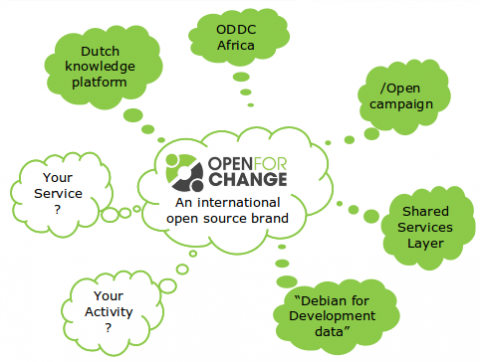
../06/ofc-ideas.png

TNO has done similar sector-wide research around open data in other sectors, and would like to take the existing research in this area a step forward. AidInfo published a cost-benefit analysis on open data, and a framework for this. The Transparency and Accountability Initiative recently published a report on introducing open data in middle income and developing countries. And we also like to include “effective use” and impacts on e.g. privacy and security, and a possible “data divide”.

We plan to look at existing literature and research, sketch a vision on what “open development in 2020” could look like, and provide a framework for a social cost-benefit analysis, and the ground work for a road map to help organisations embrace open data and “do it right” (e.g. critical success factors, activating crucial stakeholders and infomediaries).

Of course we like to hear of other research projects with recent publications or currently underway.

Aid Transparency Barcamp Nepal on August 4th

Aid Transparency Barcamp Nepal, run jointly by YoungInnovationPvt. Ltd and aidinfo, is a conference to raise the awareness of the foreign aid scenario in Nepal. It intends to create a platform to initiate conversations and connections on the effective use of ICTs to support aid transparency and effectiveness. There will be a chance for organisations and individuals to showcase innovative ideas and tools that promote effective accessibility and visualization of aid data. Further, it is hoped that it will create a platform where the best technology products around aid data can be collaborate, supported, sponsored and promoted. It is also an opportunity to raise awareness of the International Aid Transparency Initiative’s (IATI) standard for publishing aid data.

Featured speakers will include Bibek Raj Kandel, Simon Parrish, Anjesh Tuladhar, Aman Shakya, Bibhusan Bista, Hemanta Sapkota, and Prabhas Pokharel. Sessions will include:

  • Linked data and semantic web technologies for aid transparency
  • Civic engagement: creating a feedback loop on aid effectiveness
  • Community led development projects: Information processes and pitfalls
  • What is IATI format and how it enhances aid effectiveness?
  • Social media for aid awareness
  • Taking aid transparency local: radio and SMS-based transparency opportunities
  • Crowd-sourcing for better data: geo-coding and traceability

This event is targeted at the tech community (programmers, app developers, FOSS enthusiasts, mobile developers), INGOs, aid donor communities, government officials, the media and aid transparency professionals and practitioners.

For more information on this event, please visit the website: http://nepalaid.yipl.com.np/

“Everything I need to know about open data, I learned from open source”

okf2011.jpg

BoF “Open data in development” at OKCon (via Tobias Eigen)

But what did we learn from open source? Two days of Open Knowledge Conference gave lots of food for thought. And lots of inspiration as well: plenty of projects doing interesting work, and experiences to share. And to add a cherry to the cake, we had a great “open lunch for development” with several people active in development aid. My (delayed) take-aways for Open for Change.

From data.gov.* to data.your.org

Nigel Shadbolt and Andrew Stott shared their lessons from setting up data.gov.uk, and Tom Lee talked about data.gov and the recent threats of its budget cuts.

It’s crucial to have top-down support, bottom-up activists, and middle-tier connectors, to bring everything together.

  • We need to continue nurturing a network of people active in open data for development, to make sure we have the tools, ideas, reports, cases, and standards we need, and to support the early adopters within organisations.
  • We have done some work on an “open data briefing”, based on the OKFN open data manual, and we need to continue work on that: in four pages, explain the why, how, what and who of opening up your organisation.
  • It’s important to understand the decision-making and budgeting processes to make the case at the right time and the right place. We could review the best material on “how to convince your boss to use open source” as a starting point.

There are many reasons to embrace open data, don’t rely on a single one to make your case: tranparency and accountability; economic value, growth and innovation; efficiency and cost-effectiveness; improving (public) services; (public) engagement; and civil society and social capital.

Close the feedback loop: the “build it and they will come” approach won’t work here either. Try to publish data that matters to people, but also consider that “data probably has a long tail”.

  • Releasing data early and incrementally creates a steady news flow, and also enables you to work with feedback and to champion people to create peer pressure on the “refusniks”.
  • Friedrich Lichtenberg tries to turn the lack of opportunity to debate what you see in “ Where does my money go ” into an opportunity for “ Open Spending ”. In essence: how do we provide support to create a data cycle instead of a data pipeline.
  • There is a challenge to create or appoint authoritative sources and URIs. In fact, this was a key topic in the online workshop organised by David Pidsley during the Open Data for Development Camp.
  • In a broader sense, the emerging standards and work done on open data in development cooperation needs to settle down in one or more ontologies. This will also pave the way to build more focused data enrichment services that can tap into the existing wealth of documents we have, to help professionals navigate those.

Statutory requirements matter.For governments, this mainly has to do with legal frameworks and obligations. But every organisation could (and should) enshrine crucial elements of open data in their policies: how to ensure “open” stays open, and how to prioritise.

  • The UK government re-used lots of existing policies, such as the National Statistician’s guidelines about reasonable measures to prevent identification of individuals. The open data manual could be a good portal to such policies.
  • Principles and policies should not be set in stone (at least: not early on), to prevent weasel words like “to the extent feasible” creep in. The essential lesson: in the first phase, compromise on the data that will be published, but not on the license applied to it. (Again: the paradigm shift in thinking and acting is what matters first.)

Why we want to be open: the fallacy of community collaboration

In open data, a lot can be learned from “open source”. In terms of tools and practices, I think we are, but in terms of the stories we tell ourselves and others about why we do it, Benjamin Mako Hill gave some interesting insights on the promise of open source to create better software because more people will be able to see, comment on, and improve the code.

In reality, this hardly happens. He showed graphs of projects on Sourceforge, the first major hub of open source software. The median number of developers working on a project is one. If you only look at “mature projects” (multiple releases, longer history), the median is still one. If you look at the most popular projects (10% of most downloaded), the median is two.

In other words: there are very, very few projects where mass collaboration did happen.

And we actually don’t really understand why some of them succeed.

It doesn’t mean we should not do open source, but we should not promote it with the story that it leads to peer review and better code. There are plenty of other reasons, though, and we should make sure we capture those in our Open for Change Manifesto as well:

  • It gives the users freedom: autonomy, control and empowerment. The technology constrains how and what we can communicate as people. Openness allows you to remove barriers.
  • It is resistant to “anti-features” (limitations built in to charge for removal). With an open license, anyone can process a data set to make it more useful for themselves or others.
  • It makes failure cheap: since the investment to be open is low, there already is reward in just making your own solution available.
  • It also makes success cheap: some products failed to have a big enough market to sustain a company producing it, but a community of users can produce and maintain it.
  • It is not dependent on persons or organisations: even if the original producer(s) stop working on it, others can continue and keep it available.
  • It sometimes does lead to mass collaboration. And it then can produce something that would be impossible to organise through traditional means.

Why we want to be open: a stronger vision

In our beta Manifesto, we tried to capture the essence of why we want to be open, and OKCon was a chance to reflect on it.

I liked a definition given by Jose Alonso of the Web Foundation: the web is humanity connected through technology. And as Brewster Kahle of archive.org said: the last generation put a man on the moon. Pretty cool, but our generation can make all knowledge available to all people on earth, for always and for free. That’s a powerful ambition too.

It is crucial to also translate the promise of open data, open access and open knowledge to “effective use”: how do we make sure we create autonomy, control and empowerment, but more even so: security for the ones who want to realise their “ right to access”? “Open” is part of a struggle for human rights.

Hopefully, a joint “Slash Open” campaign can unite the efforts of many organisations working for humanity in shaping the technology we need and put it to effective use.
"World Bank Institute: We’re also the data bank"

At the Activate Conference, Aleem Walji of the World Bank Institute gave a brief overview about their first experiences with open data (their data catalogue website gets more visitors than their home page now, and Google translated the top indicators they saw people were searching for into 39 languages), and how they hope to connect their aggregate data with the detailed service delivery we can now collect and make available, to build a “Yelp for Development”.

Open for discussion: the "Open for Change" Manifesto

Ever since we started networking as “development 2.0 pioneers”, we wanted to express our core values, so we can grow our network into a movement.

In January we adopted the name “Open for Change”, and worked to organise the world’s first “Open Data for Development Camp” (ODDC) in May, to bring together the people in that movement.

Based on the conversations we had with many of you (before, during and after ODDC), and inspired by other manifestos, we now have created a beta version of the Manifesto for Open for Change, and love to hear your feedback.

The Manifesto is the foundation for more plans and activities to grow our global movement. Schematically, it could look like this:

ofc-ideas.png

We see “Open for Change” as an open source brand and as an international ecosystem, based on the Manifesto and with a light-weight organisational and technical structure to connect various projects and activities:

Most of these are in their conception phase, some are already starting to take shape with people working on it.

Our focus now is to get feedback on the Manifesto and to hear your thoughts on the “open source brand” and the organisational form it should take.

Click here to go to the Manifesto and give your feedback! Leave a comment, and forward this message to people you think should be involved! Thanks!

Participate in ODDC: in Amsterdam… or online!

oddc.jpg

The list of people signing up for the Open Data for Development Camp is growing. We’ll have people involved in defining the International Aid Transparency Initiative standards, people involved in making development data open in governments and organisations, people working on Open Access, on the Apps for Development contest, and more!

We hope even more of you will make it to Amsterdam on May 12 and 13, but now there is a chance to participate online as well: David Pidsley is coordinating a two-day online workshop to collaborate on Linking Development Data.

Join us, online or offline!

Open Data for Campaigning

ecf-map.png

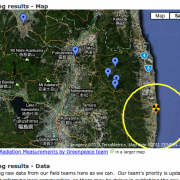
Two weeks ago was the Ecampaigning Forum (ECF) organised by Fairsay in Oxford, and directly after that, the Open Data for Campaigning Camp (ODCC) put together by Tim Davies, Javier Ruiz and myself. One direct result of our efforts to promote the use of open data in campaigning organisations is Greenpeace’s experiments to make their measurements of radiation levels near Fukushima available as raw data: http://www.greenpeace.org/fukushima-data (way to go, Andrew! That’s two-star open data). Good to remember that the teams have to deal with lots of logistics and radioactive decontamination, so publishing spreadsheets isn’t at the top of their priorities.

By the way, next week, I’ll be at re:publica and re:campaign in Berlin, again talking with NGOs and campaigners about open data.