Skip to content

Ideas

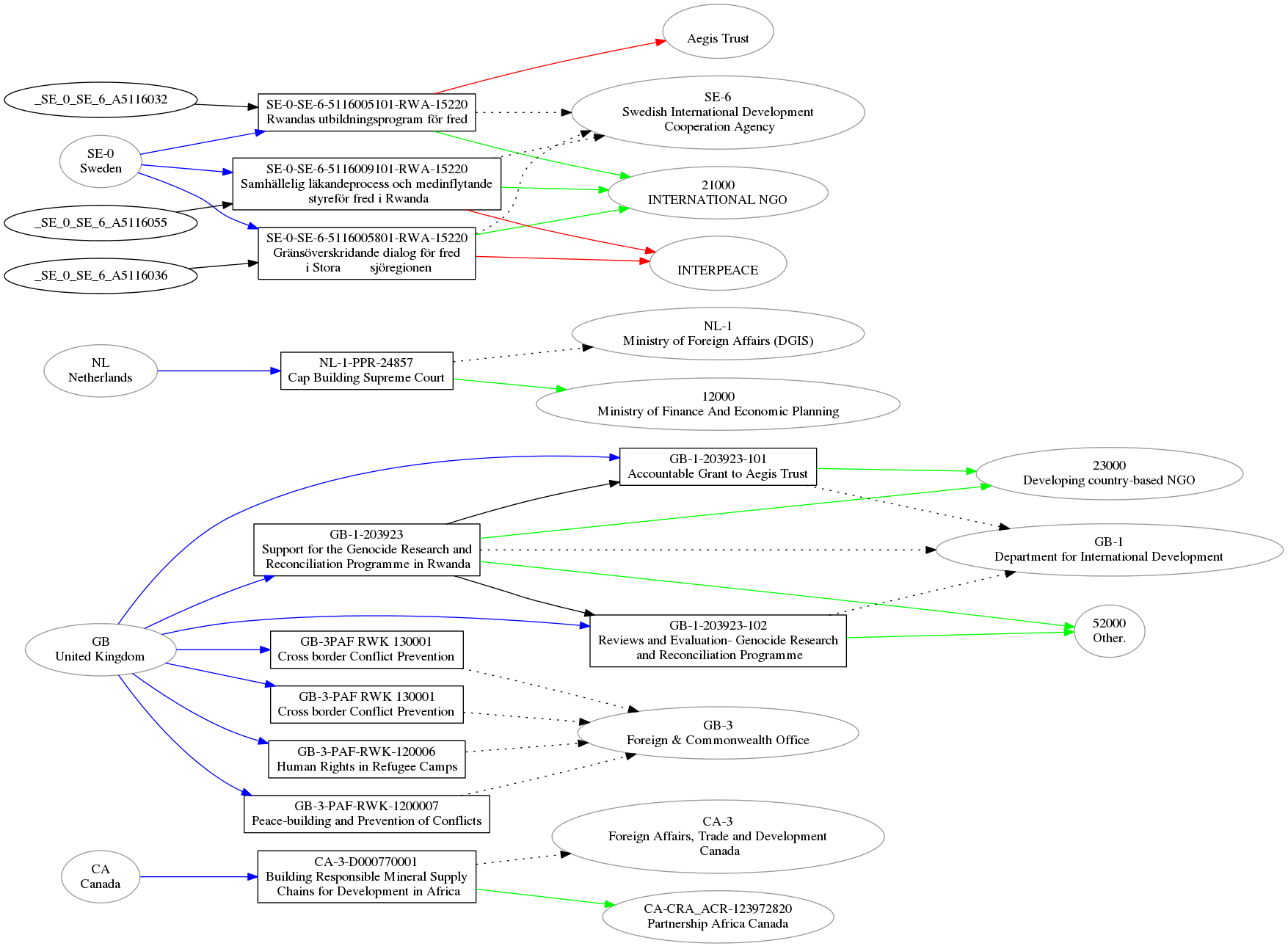
Examining structures in IATI

structure.png

Dozens of new organisations are getting ready to publish IATI data: the Dutch Ministry of Foreign Affairs made it a requirement for the grantees in the strategic partnerships programme on lobby and advocacy that started this year.

The Ministry has published their guidelines on how to create a useful IATI data set, and part of those guidelines (chapter 3) is an overview of how to represent the structure of funding and activities.

I’m helping organisations get their data in order, and so I was looking for an easy way to see the structure of activities in their data. Browsing through XML data only gets you so far…

Development Data: One Step Beyond

presentation-1.jpg

Today, Open Development Camp is happening again. I’m part of a panel:

In the last five years much emphasis has been put on the publication of open development data. How useful has this effort been? What have we learned so far? and Which insights did we gain? Theo van de Sande (The Netherlands Ministry of Foreign Affairs), Leonardo Pérez-Aranda (Oxfam Intermón) and Rolf Kleef (Open for Change) will share their insights on this subject and together we will explore what the future has store for open development data.

My contribution to kick off the discussions:

Results in IATI? Or observations? Or sources?

../../../../assets/posts/iati-logo-name.png

The IATI Technical Advisory Group is kicking off, and one discussion I’m looking forward to is on how to publish “results”.

There are proposals by Herb Caudil of DevResults (1, 2) and earlier reflections by Bill Anderson (1). Herb’s proposals are good: we need indicator references (or even URIs), and it makes sense to have a separate standard to describe the definition and logic of indicators.

After a few days of discussing standards, and with some concerns of NGOs in the back of my head, some scattered thoughts:

The epiphany of “open” and IATI

open.png

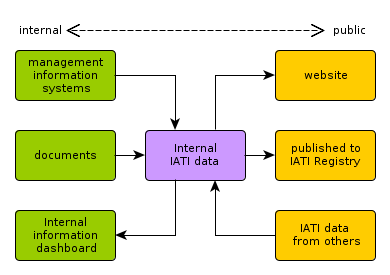
The IATI standard is meant to make it easier to exchange and compare information about activities and funding flows in development aid worldwide. But it can be useful within a (network of) organisations as well, even if you don’t feel ready to share that data with the rest of the world (yet).

Large organisations are starting to see the benefits: adapt your internal project management system so that it contains the necessary information in the right format, then export it to IATI data from there.

You then have an internal, vendor-independent format for your data, and have a choice of tools to put that data to use.

Ay caramba, Ubuntu 12.10: Get it right on Amazon!

Ay caramba, Ubuntu 12.10: Get it right on Amazon!:

Another glimpse at the new Ubuntu, and at what makes it awkward. Mr. Shuttleworth has already declared that all your data belong to him

“Don’t trust us? Erm, we have root. You do trust us with your data already.”

Silly me, I was thinking I had root over my own computer, and noone else, but apparently I should check the code. And 12.10 includes data-leaking features you need to switch off yourself.

A protocol for IATI implementation by CSOs: your comments, please!

../../../../assets/posts/iati-logo-name.png

The International Aid Transparency Initiative (IATI) provides a standard to publish information on aid activities, and is intended to be used by (and useful for) all actors in development aid.

Interest is definitely growing and several organisations are investigating how to implement the standard. In several countries, national platforms of civil society organisations (CSOs) are engaging in discussions with their respective Ministries how to encourage and support implementation of IATI by CSOs. In the UK, DFID is even making IATI-compliant publication of data a condition for funding. Implementing IATI brings to the surface various issues that need to be addressed, some specific for CSOs.

Within IATI, a dedicated informal working group is discussing these implications for CSOs. This CSO Working Group has produced a Background Paper, attempting to provide a comprehensive overview of such issues, and to work towards ways forward.

Drones for good, pirates in the sky

You’re enjoying a sunny day in the park with some friends. You get out your smart phone to find that piece of music your friends really should hear, and all of a sudden, a flock of colourful mini helicopters appears out of nowhere, and perform a gracious dance in the sky above you while the music plays. Then they disappear again.

Sounds futuristic? Yeah, even still looked futuristic when I saw this at the GLOW Festival in Eindhoven, last November: https://vimeo.com/36267881

Science fiction is quickly loosing its fiction part and is becoming reality. The Electronic Countermeasures installation was a proof of concept of the technology, but now the Pirate Bay is preparing for the next step: using these flying robots to build a “low orbit network of server drones”. Let the robots in the sky help you share, independent of providers and regulators.

The military are building drones for “ Non-cooperative, Biometric Tagging, Tracking, facial recognition to follow people in a crowd, so why not use the same tools for to monitor police operations in demonstrations?

http://youtu.be/9vOor1xmVDs

Although still relatively expensive, the drones are a nice addition to the $100 Satellites, using balloons and kites to make maps and asses situations, for instance in the aftermath of the Deepwater Horizon disaster, or working with communities in Peru:
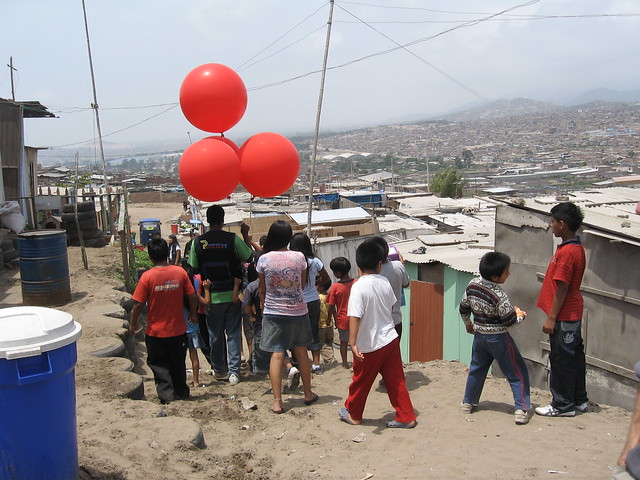
peru.jpg

Lets build Drones For Good!